Why GTA 5 Is Still So Popular in 2026 Ahead of GTA 6
Thirteen years after it first hit shelves, the GTA 5 legacy shows no signs of fading. With more than 230 million copies sold, Rockstar’s 2013 open-world epic stands as the second best-selling video game of all time — played for billions of hours by a community that never really left Los Santos.
What began as the next entry in a beloved crime series became something far bigger: a cultural landmark that has survived three console generations and shows no intention of retiring quietly.
This is the story of how a video game took over the world.
230 Million Copies: The Numbers Behind GTA 5’s Dominance
The statistics behind GTA 5 are almost difficult to process. Over 230 million copies in the wild. Billions of hours played across the globe. Around $10 billion in revenue for publisher Take-Two — more than three times what the highest-grossing movie in history ever earned at the box office.
GTA 5 didn’t just break sales records; it became one of the most significant pastimes on the planet. When Hollywood wanted to make a comedy about the chaos and connection of online gaming, Shawn Levy and Ryan Reynolds didn’t riff on some fictional title in Free Guy — they riffed on GTA. That’s the level of cultural saturation we’re talking about.
From Crime Simulator to Cultural Icon
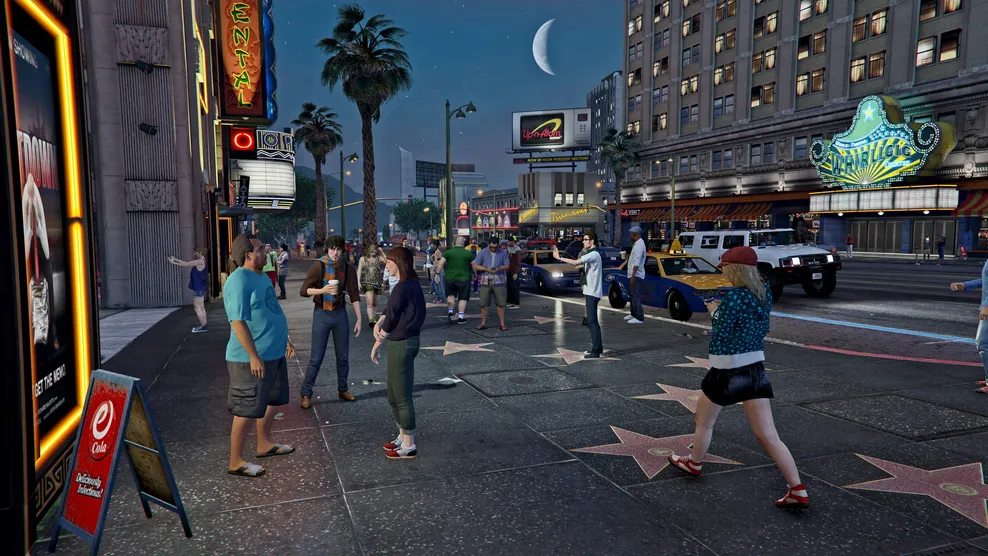
Where earlier Grand Theft Auto games were cinema-inspired crime simulators, GTA 5 grew into something else entirely: an alternate world. Los Santos became a funhouse-mirror version of Los Angeles — the most mythologised city on Earth — where players could become whoever they wanted to be.
Stunt specialist. Bank robber. Nightclub regular. Hitchhiker. Filmmaker. The game stopped being about the crimes and started being about the life players built around them.
A Course Correction: How GTA 5 Fixed What GTA 4 Broke
In many ways, GTA 5 was Rockstar correcting its own course. Grand Theft Auto 4 (2008) had been critically adored, but its dour tone and punishing driving model left some players cold — and opened the door for rivals like Saints Row to fill the gap with gleefully absurd sandboxes.
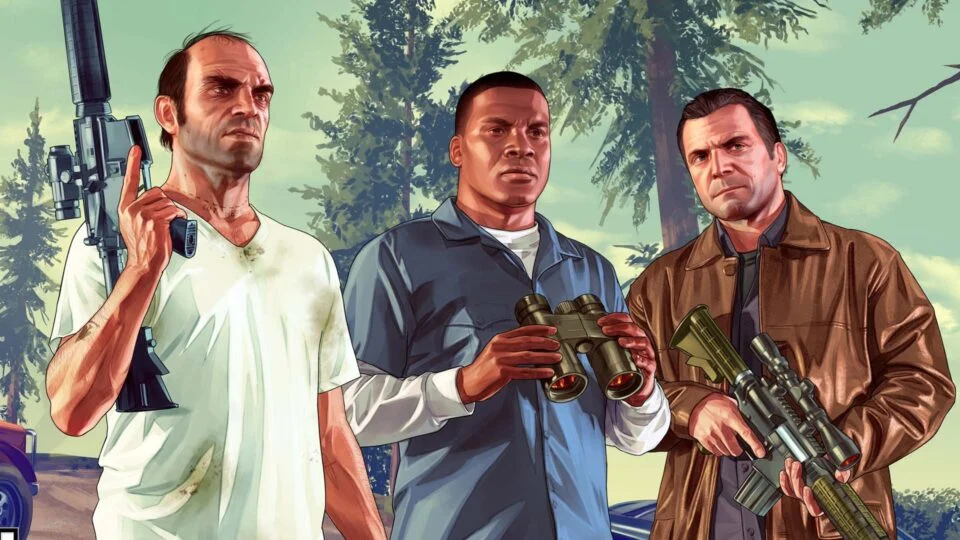
GTA 5 reclaimed that territory without sacrificing Rockstar’s storytelling ambition. The satire dials were turned all the way up, the driving was made friendlier, and the campaign delivered ludicrous plane, train, and helicopter set pieces. But the real masterstroke was structural: three playable protagonists — Franklin, the hungry young hustler; Michael, the washed-up family man; and Trevor, the walking five-star wanted level — whose stories intertwined through a character-switching system the industry is only now catching up to.
Former Rockstar animator Mike York, who joined the GTA 5 team two and a half years before launch, has described how compartmentalised the production was. Animators were handed isolated cutscenes with no sense of the wider story. Testers played the enormous game over and over for eight-hour days, yet many never saw it start-to-finish until after they left the studio. Only then, York said, could he grasp the scale of it: “I was shocked about how massive it was” (via IGN).
He also credited Rockstar North’s Scottish perspective — an outsider’s eye on American culture, sharpened by a team immersed in US television, film, and games — for the game’s razor-sharp satire of LA life.
GTA Online’s Rocky Start — and the Heists That Saved It
GTA Online launched just two weeks after the main game, and it was a mess. Servers buckled, characters lost progress, missions felt repetitive, and early reviews dismissed it as a rough sketch of something that might one day be great.
Rockstar’s then-director of design Imran Sarwar later admitted the launch “did not begin very well at all,” revealing the studio lost millions of players in that first year — players who never came back to see what Online became. The promised cooperative heists had to be redesigned from scratch after multiple delays, and Sarwar described the mode as “slowly failing” well into 2014.
The problem was conceptual as much as technical: when GTA Online launched, the live-service model barely existed. Rockstar was learning how to run a content service while still thinking like a studio that shipped finished games. What saved them was the single-player game itself — as Omdia analyst James McWhirter puts it, GTA 5’s acclaimed campaign propped up Online while Rockstar figured out the formula.
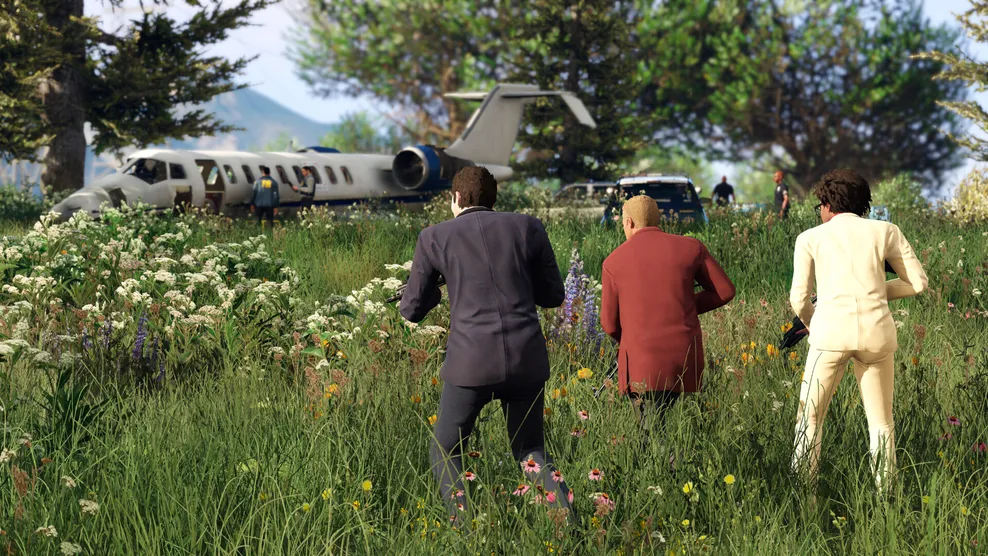
The formula turned out to be heists. Once Rockstar started delivering complex, multi-stage missions that demanded real coordination — eventually culminating in the Diamond Casino and Cayo Perico heists — GTA Online stopped feeling like a flawed spin-off and started feeling like the future of the series. Even committed solo players braved the servers rather than be left behind.
The Hidden Cost: The Story DLC That Never Was
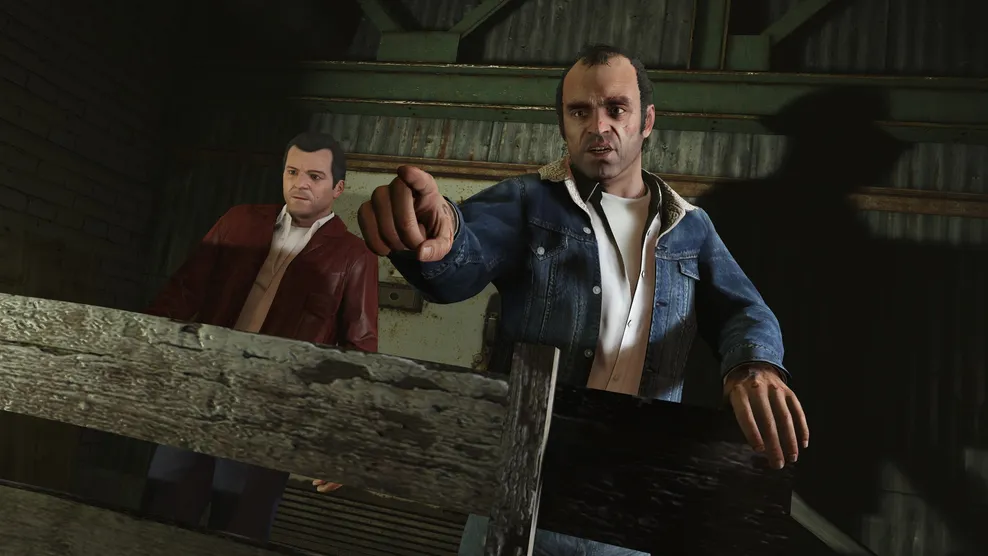
GTA Online’s triumph came at a price. Actor Steven Ogg filmed scenes for a single-player expansion that would have cast Trevor as an undercover agent — but the DLC never materialised. The resources earmarked for story expansions were swallowed whole by Online’s insatiable appetite for new content.
It was a pattern the industry knows well: the live-service juggernaut wins, and the planned DLC quietly dies. GTA Online effectively became the expansion — an endgame for solo players who arrived already knowing every street in Los Santos, now finally getting a character of their own.
An Economy of Its Own: How GTA 5 Made $10 Billion
GTA 5’s billions didn’t come from one revenue stream — they came from all of them at once. Upfront game sales. In-game purchases through GTA Online. And more recently, subscriptions via GTA+. As McWhirter notes, Rockstar has been “simultaneously pulling all of those levers.”
That flexibility is Los Santos’ superpower. Because GTA’s world is a slightly exaggerated version of our own, almost anything can be bolted onto it — cloud-top stunt races, flying cars, adversary modes that play like entirely different genres. Try adding flying horses to Red Dead Redemption and the fiction collapses; in GTA Online, absurdity is the fiction.
The result is a platform closer to Minecraft or Fortnite than to a traditional sequel-driven franchise: a virtual world first, a game second. Those endless content drops have effectively replaced the mid-tier releases Rockstar used to ship between blockbusters — the Table Tennis and Bully-sized projects — because updating GTA Online proved far more valuable, and bought the studio time between major GTA launches.
More Than a Game: The Players Who Made Los Santos Home
Statistics explain the business. They don’t explain the devotion. For that, look at players like Ash Skyqueen, a stunt creator and machinima filmmaker whose story shows what GTA 5 actually means to people.
Shortly after the game’s release, Skyqueen suffered a ruptured disc in her spine that left her bed-bound for roughly three years. GTA 5 became her lifeline — “It kept me from going insane,” she told IGN — connecting her to a community of stunt creators when work, social life, and mobility were all gone.
She turned that connection into art. Using the MenyooSP modding tool and Rockstar’s official video editor, she choreographs elaborate stunt montages and silent short films — including Siren, a Bonnie-and-Clyde-style piece watched by 180,000 viewers, and a jaw-dropping stunt through the ‘O’ of a liquor store sign that pulled in nearly a million views. Every GTA Online update, for creators like her, is a toy box of fresh props and animations.
Her wish for the future? That Rockstar officially adopts tools like MenyooSP in GTA 6. “I know they take note of this kind of stuff,” she said — and thirteen years of community creativity suggests she’s right.
The GTA 6 Question: What Happens to Los Santos Next?
All of this raises an awkward question for Rockstar. With GTA 6 launching on November 19, 2026, what happens to the game that refuses to die?
Can Rockstar run two GTA Online experiences simultaneously without cannibalising its own player base? If players migrate to Leonida, what happens to the properties, vehicles, and businesses they paid real money for in Los Santos? Analysts point to the cautionary tale of EverQuest 2, which discovered that MMO players tend to commit to one world and stay there — making a sequel’s biggest competitor its own predecessor.
Meanwhile, Rockstar’s developers have been opening up about the next chapter in Game Informer’s GTA 6 cover story, and the series’ cultural takeover continues everywhere from Hollywood to the Miami HEAT’s Vice City merchandise collaboration. The GTA machine has never been bigger — which only makes GTA 5’s shadow longer.
The Legacy: Will GTA 6 Ever Top It?
York believes GTA 5’s legacy is already untouchable — and that it may end up bigger than its sequel. His reasoning is simple: nostalgia. GTA 5 is the game an entire generation grew up inside. It will be the one they compare everything to, the one that marked them as kids.
For Skyqueen, it’s simpler and more personal. She still logs in every Christmas, when Rockstar turns on the snow. Walking the dark streets of a snowy Los Santos, she says, captures a stillness other games can’t fake — a small piece of freedom, simulated but deeply felt.
Thirteen years. Three console generations. 230 million copies. The GTA 5 legacy isn’t just a sales story — it’s proof that a game can become a place, and a place can become a home.
Source: IGN – ‘I’m Shocked That People Are Still Playing’ – How GTA 5 Took Over the World